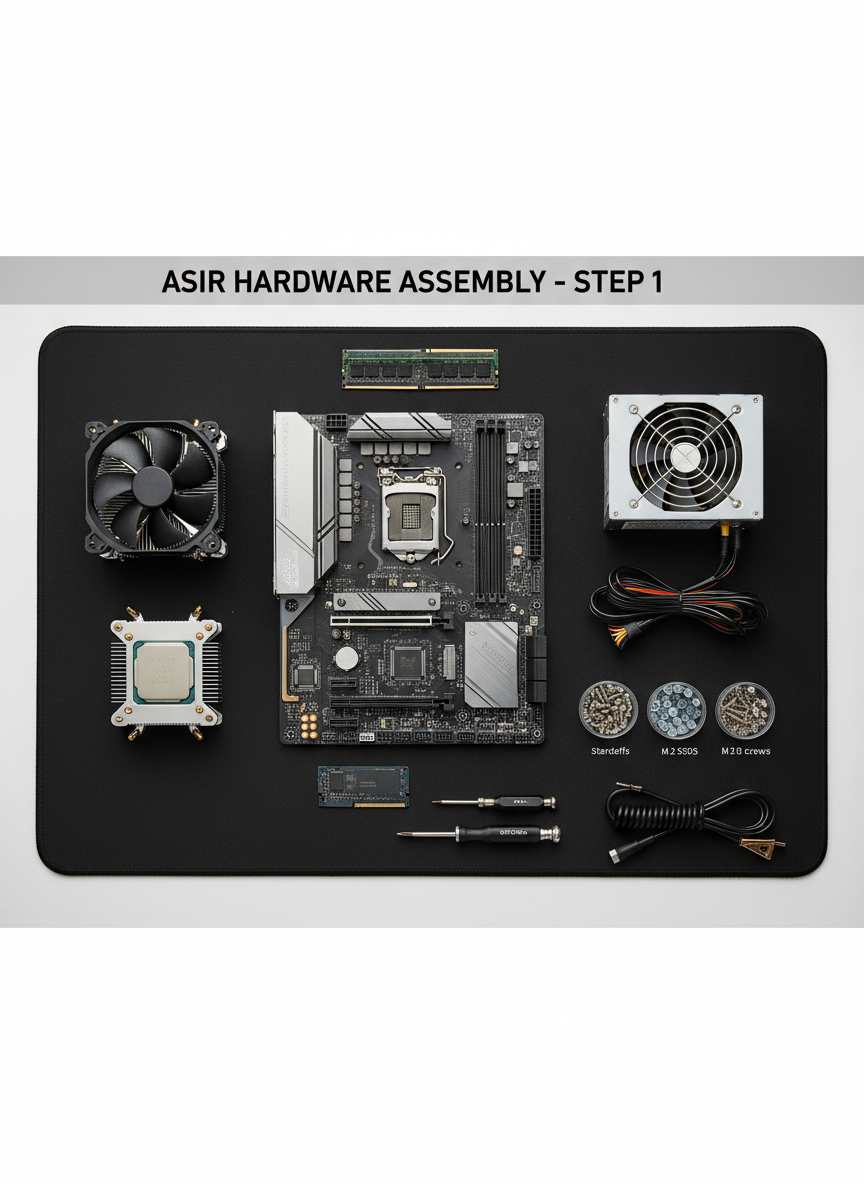
A high-resolution, overhead photographic shot of disassembled computer hardware meticulously laid out on a matte black anti-static mat. Components include a modern ATX motherboard with visible chipset heatsink, VRM stages and labeled ports, a CPU with exposed pins beside a clean metal heatsink, RAM sticks, an SSD, power supply, and neatly grouped screws in small containers. A precision screwdriver set and an anti-static wrist strap rest at the edge of the mat. Neutral, diffused lighting from a large softbox above eliminates harsh shadows, emphasizing fine details in traces and connectors. The composition follows a grid-like arrangement, sharp focus across the entire frame, creating a methodical, instructional, and highly professional mood suited for ASIR hardware assembly tutorials.

Guía de Prácticas

Esta página ofrece una introducción a la metodología de prácticas de hardware en ASIR, con objetivos, requisitos y resultados esperados para cada sesión.


Acerca de

Metodología HW ASIR

Esta guía describe un flujo de trabajo práctico para las prácticas de hardware en ASIR: objetivos claros, requisitos previos y entregables que facilitan el aprendizaje y la evaluación.
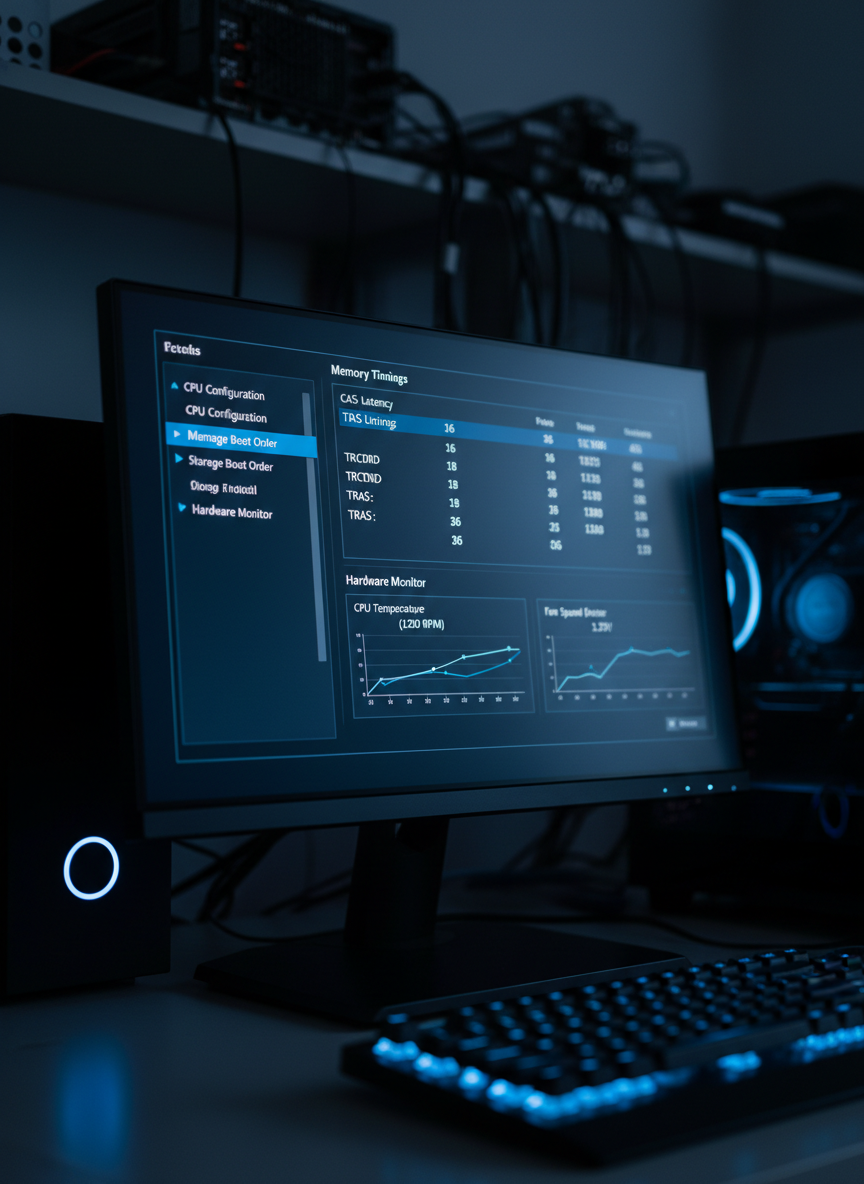
A detailed close-up of a motherboard BIOS/UEFI configuration screen displayed on a sleek, matte-finish monitor in a hardware lab setting. The on-screen interface shows clear sections for CPU configuration, memory timings, storage boot order, and hardware monitoring, with graphs and numeric readouts rendered sharply. In the foreground, slightly out of focus, the edge of a mechanical keyboard and a powered-on desktop tower with a subtle power LED are visible. The room is dimmed, illuminated mainly by the cool, bluish light of the screen, creating soft reflections on the monitor bezel and a focused, technical atmosphere. Shot at eye level with a shallow depth of field, emphasizing the BIOS interface as the central subject for ASIR hardware configuration learning.

Prácticas de laboratorio

Formularios de retroalimentación

Incluir formularios para que el alumnado reporten dificultades técnicas y propongan mejoras, asegurando mejoras continuas y mayor efectividad de las actividades.

← Volver

Gracias por tu respuesta. ✨